
Keeping up with this has been harder than I thought. Turns out having a full-time job, a packed TV-watching schedule, and an insistence on sleeping eight hours each night is a difficult balance to strike. Add on this little endeavor, and it starts to feel like an unwinnable game. Speaking of games, season two of The Last of Us premieres this week. That show is special, and we should throw a parade in its honor.
I’ve been watching a lot of uninspiring stuff on TV recently. Due to my obsessive nature, I have a compulsive need to finish what I start when it comes to shows. So while you’ll see me out in the real world talking about The White Lotus and The Pitt, just know that behind closed doors I’m also sitting through Dope Thief and the third season of Yellowjackets. That’s part of what I’d like to talk about today: the line between the good stuff and the significantly less good stuff.
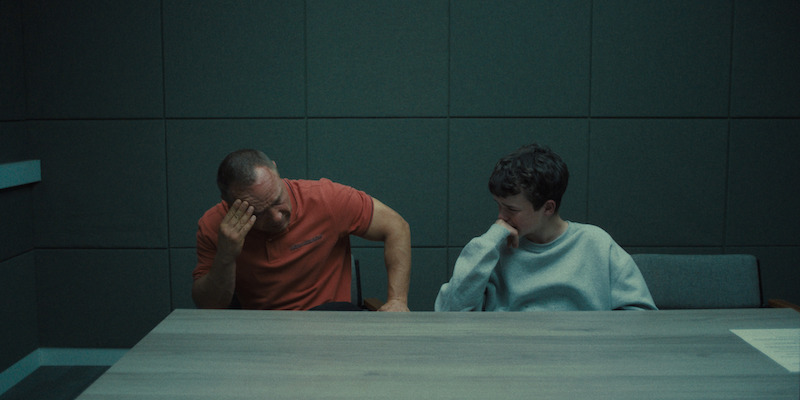
Like many of you, I was caught by surprise when Netflix dropped Adolescence last month. I had never heard of this show, and when people started recommending it to me, I assumed it was the usual Netflix slop (no offense, Netflix—it’s just that you make so much slop). I was wrong. This show is incredible. I watched all four episodes in a day. If you haven’t watched it, go watch it. It’s good. If you like good things, you’ll like it. Stephen Graham and Ashley Walters—actors for whom I’ve been a season-ticket holder for years—are incredible in it, and Owen Cooper, who was only fourteen years old at the time of filming, feels like a true discovery. Add on the fact that the writing is incredible, and the gimmick of each episode being a oner doesn’t feel gratuitous, and you have the ingredients for the best show of the year so far.
What surprised me most about Adolescence was the degree to which I connected with its subject matter. TV and movies are constantly trying to tell stories that feel pertinent to the current moment—this has been a trend since the creation of the moving image. In recent years, I’ve started to bristle at this, with shows feeling like they are more commentary than story, and I don’t think I’m alone in that. Perhaps it’s because the current media landscape is relentless, and any news story that’s trending feels inescapable—and the last thing I need is more of it in the media I consume. Perhaps it’s because original stories are risky to produce, and it’s easier to put out a satire or a commentary on a topic we’re all familiar with, and thus we’re just a bit oversaturated with this type of story. It’s hard to pinpoint exactly where this disconnect comes from, but after saying for months that I was done with any show trying to weigh in on a contemporary issue, I was floored by Adolescence.
In case you don’t know, Adolescence spends a lot of time dwelling on loneliness in today’s youth, the effect of the internet on teenagers, and growing sentiments of misogyny in the world. I was ready to write this show off as another example of “show produced by a tech giant attempts to shine a light on the manosphere,” but what we got was a graceful, thoughtful meditation on modern dysfunction that was more interested in character than buzzwords. Never in this show is a character reduced to stereotype; there are never easy answers, and nothing is tied up neatly. Creators Jack Thorne and Stephen Graham are not here to explain this problem or attempt to solve it—they are merely putting a face on it. This show is ripped from the headlines, but it has no interest in feeding me an answer to the ills of the world. Instead, I am viewing an issue through the eyes of characters that feel rich and grounded. That’s what makes this show work.
The Wire used to do the same thing. Think drug dealers are evil and ruining your community? Here’s D’Angelo Barksdale. Think cops are nothing more than bullies who exploit the poor? Here’s Lester Freamon. David Simon put a face on these issues, and now you think twice before saying anyone is just one thing. People are complicated and contain multitudes, and sometimes we need TV to remind us of that. Not every show handles these issues with such grace, and it means the world to see a show like Adolescence step up to the plate.
Last year I was subjected to watching the fourth season of The Boys. That show is doing all the things I assumed Adolescence would do—identifying issues of today and portraying them—but stripping all humanity from the issue. Now look, I get it, The Boys is a satire, and it is trying to lampoon Trumpian politics and internet culture, not show us the beating heart of these issues—but not all satire is created equal. The Boys does a good job of creating humorous parallels to political issues of today, but it seems disinterested in doing anything more than saying, “This is crazy, right?” This show has no responsibility to paint a nuanced picture of these issues, but the satire falls flat due to its ironic detachment. Homelander, for example, has become such a caricature of a fascist leader that all I can say is, “Yup, that’s what fascists are like.” Is it a humorous portrait of what today is like? Yeah, I guess. Does it make me feel literally anything? Not really.
So Adolescence handles toxic masculinity well, and The Boys handles toxic masculinity less well—but they have different goals. Is the point that satire lacks heart and is destined to fail? Of course not. Satire often rules. In fact, there is a satire airing right now that is absolutely crushing it. Please allow me to introduce Seth Rogen and Evan Goldberg’s The Studio.
When I first started seeing promos for The Studio, I was incredibly pessimistic (starting to think I’m wrong about shows a lot). Just five months prior, another show aiming to parody the film industry debuted: The Franchise on HBO. Never heard of it? Well, it wasn’t very good, so you’re not missing out. Both shows are satires of the world of movies—The Studio is focused on the development side, while The Franchise is centered on production. Largely the same subject matter, but a huge gulf in their effectiveness.
The Studio is in love with the glitz and glamour of Hollywood. You can see it in its production design, visual palette, and overwhelming star power. The show follows a cinephilic studio head trying to make sense of the battle between art and commerce, and you can see Rogen and Goldberg’s passion for the world of movies in every frame. At times, the show is irreverent and at others sincere, but you can always feel, at its core, a great deal of admiration for the medium it’s focused on. On the flip side, The Franchise is much colder, painting a film set as a purgatorial wasteland where dreams go to die. The craft of making movies is shown to be a slog—one that is both draining and soul-crushing. The odd thing is, they both have the same thesis: we love movies, and the current industry landscape is ruining them. Yet the two shows could not feel more different in tone.
One could easily say that the reason The Franchise, which was recently canceled by HBO, doesn’t work as well as The Studio is as simple as it not being as funny, but I think the issue is one centered around heart. I know movies are dying. You know movies are dying. Getting a few laughs at the film industry’s expense is great and all, but it feels far more worthwhile to me to do it with a little bit of soul. Have your audience buy in while you roast Hollywood. I’ve been saying for a very long time that the most important thing in effective television is character, and I think the discrepancy between these two shows really underlines that. Show me a real person—I’ll laugh harder, smile wider, and cry uglier.
So that is the line between the good and the significantly less good. Introduce me to someone new who makes me feel like I’ve known them forever. If you do that, you can lampoon whatever you want—and if you rip something from the headlines, you’d better have the characters to support that issue. Adolescence did that, and we’re all better for it.
 joe-tv.com